
Quality of earnings (QoE) measures how much of a company’s reported profit is real, repeatable, and backed by actual cash rather than accounting choices. Buyers, lenders, and sellers use it to strip out one-time noise from the income statement and land on a normalized earnings figure. That number, rather than the one on your tax return, drives the price and structure of almost every deal.
TL;DR:
- A high-quality earnings report adjusts EBITDA by removing unsupported add-backs, ensuring they are well-documented and genuinely non-recurring.
- The QoE ratio, cash flow from operations divided by net income, indicates whether profits are converting into actual cash over multiple years.
- Common red flags include customer concentration, unsupported adjustments, weak cash conversion, and aggressive revenue recognition, which can complicate negotiations.
- Preparing clean financial records, contracts, and documentation beforehand helps minimize delays and strengthens negotiating positions during due diligence.
- A typical QoE project takes two to three weeks for smaller deals, with costs varying from a few thousand dollars to tens of thousands depending on complexity.
Table of Contents
- Quality of Earnings Basics: What a QoE Report Actually Evaluates
- How Buyers, Lenders, and Sellers Put QoE Findings to Work
- Reading the Numbers: Adjusted EBITDA, the QoE Ratio, and Cash Conversion
- What the Process Looks Like, and What It Costs
- Red Flags That Show Up Again and Again
- Prepare Before Diligence, Not During It
- Getting Your Numbers Ready Without Hiring a Full QoE Team
- Sources
- FAQ
Quality of Earnings Basics: What a QoE Report Actually Evaluates
A QoE report doesn’t just re-check your math. It rebuilds your earnings from the ground up, testing whether the profit you report would still show up next year under a new owner.
The centerpiece is adjusted EBITDA, a normalized version of earnings before interest, taxes, depreciation, and amortization that removes distortions like a one-time legal settlement or a founder’s personal car lease. Beyond that single number, a QoE report typically covers:
- Revenue quality: how much revenue is recurring versus one-time, what contract terms guarantee it, and how concentrated it is among a handful of customers (see BabyLoveGrowth pricing and growth insights).
- Working capital analysis: comparing accounts receivable, inventory, and payables against historical norms to set a fair working capital target for closing.
- Balance sheet checks: aging receivables, slow-moving inventory, and contingent liabilities that could surface after the deal closes.
- Cash flow reconciliation: tracing reported profit back to actual cash generated by the business.
Earnings that hold up under this kind of scrutiny share a common trait. The CFA Institute’s guidance on financial reporting quality defines high-quality earnings as those that are sustainable, predictable, and closely tied to core operating activity, not one-off gains or aggressive accounting choices. That distinction, sustainable versus manufactured, is the entire point of the exercise.
How Buyers, Lenders, and Sellers Put QoE Findings to Work
A QoE report only matters if it changes behavior at the negotiating table, and it usually does. Findings from the analysis feed directly into how a deal gets priced and protected.
- Purchase price and multiples move with adjusted EBITDA. If a buyer’s diligence team reduces your adjusted EBITDA due to unsupported add-backs, the pricing impact depends on the valuation multiple applied, potentially resulting in a significant change to deal value.
- The working capital peg gets set from the analysis. Buyers and sellers agree on a normalized working capital level at closing, with a post-close true-up if actual working capital lands above or below it.
- Deal protections get shaped by risk findings. Customer concentration or weak documentation often leads to holdbacks, escrows, or earnouts rather than a clean walk-away price.
- Renegotiation is far more common than termination. Most QoE issues lead to a price adjustment or added structure rather than a collapsed deal, though a serious finding, like fabricated revenue, can still kill it outright.
Reading the Numbers: Adjusted EBITDA, the QoE Ratio, and Cash Conversion
Not every add-back deserves to survive diligence. A legitimate one has three things going for it: paper trail, repeatability, and a clear break from ongoing operations. Common examples include:
- A one-time lawsuit settlement with a signed agreement attached.
- Above-market owner compensation, with a comparable market salary cited as the benchmark.
- Non-operating income, like a one-time insurance payout unrelated to the core business.
Dubious add-backs look different. “Non-recurring” consulting fees that show up three years running, or a vague “personal expense” line with no receipts, tend not to survive a buyer’s scrutiny.
Pro Tip: If you can’t produce an invoice, contract, or bank record for an add-back within five minutes, assume a buyer’s advisor will challenge it.
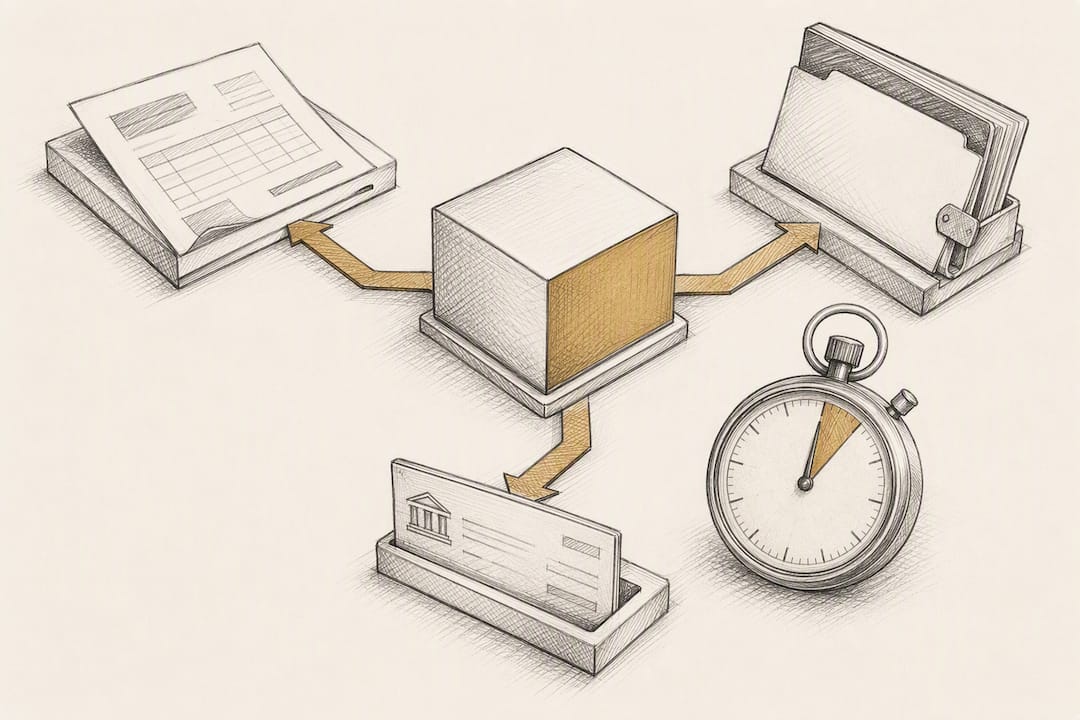
One of the more useful diagnostic tools is the QoE ratio, cash flow from operations divided by net income. A ratio near or above 1.0 suggests earnings are converting into real cash. A ratio well below that, especially over several years, can mean profit is piling up on paper while receivables and inventory quietly absorb the cash. Analysts generally prefer comparing EBITDA against operating cash flow over a full three to five years rather than a single strong quarter, since one good period can mask a longer pattern of poor conversion.
What the Process Looks Like, and What It Costs
A QoE engagement runs on a fairly predictable rhythm, even though the details shift with deal size.
- Scoping. The provider defines what’s in and out of scope based on deal size and complexity.
- Data request. The seller provides financials, general ledger detail, contracts, and supporting schedules.
- Analysis. The team builds the EBITDA bridge, tests add-backs, and reconciles cash flow.
- Draft review. Findings go back to the buyer or seller for questions and clarification.
- Final report. A polished report, often with an executive summary, supports the closing negotiation.
For small and lower middle-market deals, the whole process typically takes two to three weeks once the provider has full data access, though messier books can stretch that closer to six weeks. Fees for smaller engagements commonly run from a few thousand dollars to the low tens of thousands, driven by the number of legal entities, the quality of the accounting system, and how many adjustments need testing. Sellers who show up with clean books and answer data requests quickly routinely cut their own timeline in half.
Red Flags That Show Up Again and Again
Certain patterns surface so often in QoE work that experienced advisors check for them almost automatically. Analysts commonly flag:
- Customer concentration. When one or two customers drive a large share of revenue, losing either one threatens the whole earnings base.
- Unsupported add-backs. Owner perks, vague “one-time” costs, or adjustments with no paper trail.
- Weak cash conversion. Rising accounts receivable, bloated inventory, or deferred expenses that inflate reported profit without matching cash coming in.
- Aggressive revenue recognition. Booking revenue before it’s earned, or recognizing it ahead of the contract terms.
- Related-party transactions. Deals with entities the owner also controls, which can distort true operating cost.
- Excessive capitalization. Costs that should hit the income statement getting parked on the balance sheet instead.
None of these automatically kills a deal. But each one gives a buyer use to renegotiate, and the more that stack up, the harder that conversation gets.
Prepare Before Diligence, Not During It
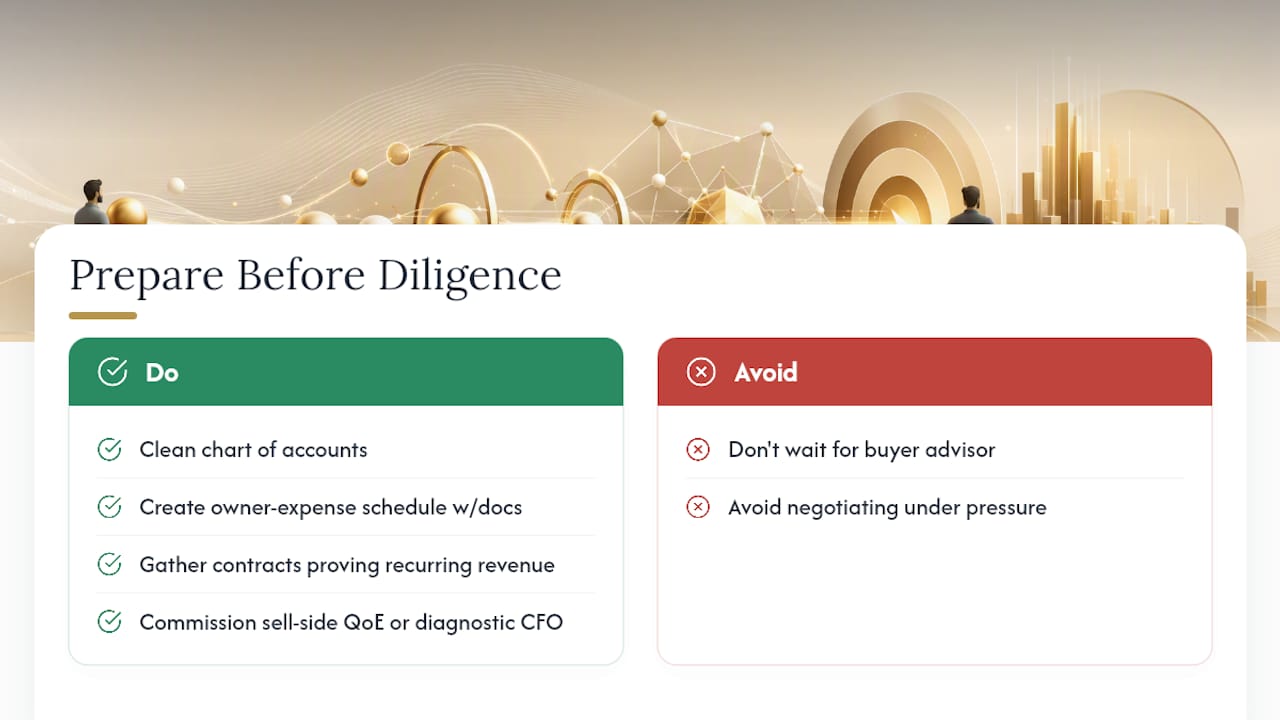
Founders who wait until a buyer’s advisor shows up to think about earnings quality are negotiating from behind. Get ahead of it: clean up your chart of accounts, build a schedule of owner-related expenses with documentation attached, and gather customer contracts that prove which revenue is actually recurring.
A diagnostic review or a fractional CFO engagement typically surfaces the same issues a buyer’s QoE would, but earlier and with time to fix them, often improving cash conversion before anyone outside the company sees the numbers. If you’re planning a sale in the next 12 to 18 months, commissioning your own sell-side QoE ahead of buyer diligence usually beats waiting. It lets you fix problems on your own terms instead of negotiating around them under pressure.
Getting Your Numbers Ready Without Hiring a Full QoE Team
You don’t always need a full sell-side QoE to know where you stand. Commerce Catalyst built the DTC Operator Diagnostic specifically for founders who want a clear read on their financial health before a buyer, lender, or advisor ever asks a question.

The diagnostic and the Financial Health Assessment both work the same core issues a QoE would flag, revenue quality, add-back legitimacy, cash conversion, without the cost or timeline of a full transaction-side engagement. If you want a faster gut check first, a Founder Hour gives you direct time with someone who has built and exited a consumer brand, walking through your numbers and flagging what a buyer would flag first. Start with the diagnostic to see exactly where your earnings quality stands today.
Sources
- CFA Institute: Financial reporting quality (2026)
- Bedrock Quality of Earnings: Quality of Earnings Report: Complete Guide for Buyers
- Investing
- Anders CPA: Quality of Earnings (QoE) Report: What It Is (and Why It Matters in M&A)
FAQ
How Do You Determine the Quality of Earnings?
You determine it by normalizing EBITDA for one-time items, testing whether add-backs have real documentation, and comparing reported profit against actual cash flow from operations over several years. A business that converts most of its earnings into cash, with revenue spread across a healthy customer base, generally shows strong earnings quality.
What Is the Difference Between Quality of Earnings and EBITDA?
EBITDA is a single-calculated number, earnings before interest, taxes, depreciation, and amortization. Quality of earnings is the broader analysis that tests whether that EBITDA, and the rest of the income statement, actually reflects sustainable, cash-backed performance rather than accounting adjustments or one-time events.
What Is Good Earnings Quality?
Good earnings quality means profit comes from core, repeatable operations rather than one-time gains, and that a large share of it converts into actual cash. The CFA Institute ties earnings quality directly to sustainability and predictability tied to core operating activity.
How Long Does a Quality of Earnings Analysis Take?
For small and lower middle-market deals, a QoE analysis typically takes two to three weeks once the provider has complete access to financial data. Messy books, missing contracts, or slow seller responses can push that timeline out closer to six weeks.
Is a Quality of Earnings Report the Same as an Audit?
No. An audit tests whether financial statements comply with accounting standards like GAAP, while a QoE report focuses on economic sustainability and how predictable those earnings are for a buyer or lender making a forward-looking decision.