A fractional COO is a senior operations executive who joins your leadership team part-time, on a retainer or defined-hours basis, and is accountable for operational outcomes rather than a fixed number of hours worked. Founder-led companies typically bring one in once growth has outpaced informal systems and the founder is buried in execution instead of strategy. Done right, a fractional COO builds process, tightens accountability, and delivers measurable operational gains within a few months.
TL;DR:
- A fractional COO works as an embedded leader, responsible for operational outcomes, typically dedicating 10 to 25 hours per week depending on company needs.
- The role focuses on establishing processes, building accountability systems, and managing key operational decisions to deliver measurable improvements within a few months.
- Engagement success relies on a diagnostic phase to identify the highest-impact bottleneck, followed by a structured plan with clear owners and metrics.
- Most companies hire a fractional COO when founders spend over half their time on firefighting or systems start failing at higher revenue milestones, usually between $5 million and $30 million.
- Costs generally range from several thousand dollars per month to mid five figures, with the engagement often lasting several months to years until scaling to a full-time hire.
Table of Contents
- What Is a Fractional COO, Exactly?
- What Does a Fractional COO Do Day to Day?
- Fractional COO vs. Interim COO vs. Consultant vs. Full-Time COO
- When to Hire a Fractional COO: Signals Worth Tracking
- Engagement Models and What Budget Buys
- How to Make a Fractional COO Engagement Actually Work
- What Founders Get Wrong About Fractional Leadership
- How Commerce Catalyst Approaches Fractional Operating Leadership
- Sources
- FAQ
What Is a Fractional COO, Exactly?
The “fractional” part refers to time, not authority. A fractional COO sits inside your leadership team the same way a full-time COO would, running meetings, setting priorities, and making calls on hiring and process. The difference is they do it in a defined slice of the week or month, not five days straight.
This is not an outside advisor who drops recommendations and leaves. A fractional COO embeds. They join your Slack, sit in your leadership meetings, and carry a scoreboard they are personally accountable for. That distinction matters because it changes how the engagement is structured and priced.
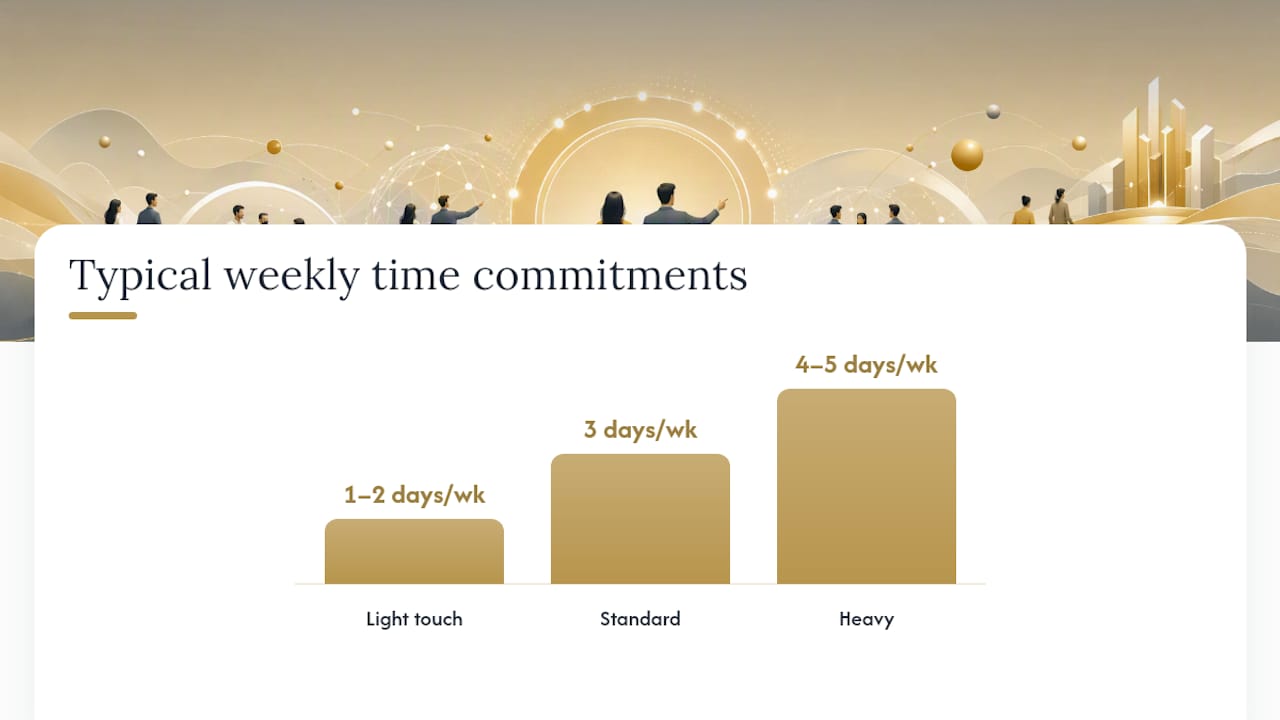
Time commitment varies by company stage and complexity. Most engagements fall into one of these patterns:
- Light touch: one to two days per week, common for companies still finding product-market fit but drowning in operational noise.
- Standard: three days per week, the most common shape for founder-led brands in the $5 million to $30 million range.
- Heavy: four to five days per week, often used during a restructure, a new product launch, or a leadership gap before a full-time hire lands.
A founder running a 20-person consumer brand might bring in a fractional COO at three days a week specifically because customer complaints are piling up and nobody owns fulfillment accountability. Within a quarter, that person has usually rebuilt the process and handed off a working system, not just a diagnosis.
What Does a Fractional COO Do Day to Day?
The job description sounds broad on paper. In practice, it narrows fast once you see what actually consumes the calendar.
- Run the operating cadence. Weekly leadership meetings, monthly business reviews, and OKR tracking that actually gets followed up on, not just written down.
- Build the processes that are missing. Most founder-led companies run on tribal knowledge. A fractional COO documents it, assigns owners, and closes the gaps that cause repeat fires.
- Manage people decisions. This includes hiring priorities, org structure, and sometimes performance conversations the founder has been avoiding.
- Improve delivery and margin. Fulfillment speed, vendor terms, inventory turns, whatever throughput bottleneck is costing money gets triaged first.
- Create accountability. Dashboards, KPI reviews, and a rhythm where numbers get discussed before they become emergencies.
Pro Tip: Ask a prospective fractional COO which single bottleneck they would fix first. If they can’t name one within the first conversation, they’re selling a philosophy, not an operating plan.
Most fractional COOs blend strategic thinking with hands-on execution rather than staying in either lane exclusively, which is the combination founder-led brands are usually missing in the first place. Founders should expect a short list of deliverables within several months: a documented operating cadence, at least one fixed process gap, and a dashboard that shows whether the business is actually improving or just busier.
Fractional COO vs. Interim COO vs. Consultant vs. Full-Time COO
Founders often confuse these four roles, and picking the wrong one wastes both money and months. Each one solves a different problem.
- Fractional COO: ongoing, part-time, embedded, accountable for outcomes over months or years. Best when operational needs are real but don’t justify a full salary yet.
- Interim COO: full-time, short-term, usually bridging a leadership gap after a departure or before a permanent hire is found.
- Consultant: project-based, delivers a recommendation or a deliverable, then hands it off. Good for a specific analysis, not ongoing execution.
- Advisor: outside counsel, occasional touchpoints, no operational authority. Useful for perspective, not for running the business.
- Full-time COO: permanent, full ownership, appropriate once operational complexity and headcount justify a dedicated executive salary.
The distinction that trips founders up most is between advisor and fractional COO. An advisor tells you what to do. A fractional COO does it, with you, and owns whether it worked. If you’ve hired three advisors and nothing has actually changed operationally, that’s usually the signal you needed an operator, not more counsel.
When to Hire a Fractional COO: Signals Worth Tracking
The clearest signal is how the founder spends their week. If more than half your time goes to operational firefighting instead of strategy, sales, or product, that’s the first red flag. A second signal is failure mode: systems that worked at $2 million in revenue start breaking at $8 million, and nobody owns the fix.
Common triggers include a founder’s calendar consumed by day-to-day operations, informal systems collapsing under growth, or a new product line and restructure that need ongoing operational leadership rather than a one-time project. Companies most often bring in fractional COOs during exactly these moments, not before them.
Fractional leadership tends to show up most in companies of moderate revenue scale, where operational complexity has outpaced the founding team’s bandwidth but a full-time C-suite hire isn’t yet justified by headcount or budget.
The execution gap is real. Only 8% of leaders excel at both strategy and execution, according to Harvard Business Review’s analysis of leadership skill splits. Most founders are strong at one and weak at the other, which is precisely the gap a fractional COO is built to close.
Track these metrics to know if the hire is justified and later working:
- Founder hours per week spent on operations versus strategy
- Order fulfillment or delivery time trends
- Gross margin movement quarter over quarter
- Number of recurring “fire drills” per month
- Employee turnover in operational roles
Engagement Models and What Budget Buys
Pricing scales with scope, seniority, and time commitment, not just hours logged. Typical engagements run 10 to 25 hours per week, and monthly cost commonly ranges from several thousand dollars to mid five figures depending on how much of the business the role touches.
Four contract shapes dominate the market:
- Retainer: a fixed number of days per month, the most common structure for ongoing operational leadership.
- Hourly: billed per hour, usually reserved for narrow, well-defined projects rather than full operating ownership.
- Project-based: a fixed fee for a specific outcome, like a fulfillment overhaul or a 90-day margin sprint.
- Operator-in-Residence: an embedded, higher-touch model where the operator functions closer to a full leadership team member for a defined period.
Pricing often tracks seniority and breadth of remit more than raw hours. The judgment a senior operator brings to a hard call is what you’re actually paying for, not a timesheet.
Before signing anything, negotiate three things: the KPIs that define success, a reporting cadence you’ll actually read, and a transition plan if the engagement scales toward a full-time hire later.
How to Make a Fractional COO Engagement Actually Work
The engagements that succeed follow a similar rhythm from week one. The ones that flounder usually skipped the diagnostic and jumped straight to “fixing everything.”
- Weeks 0 to 2: diagnostic. A focused review to find the single strongest bottleneck, not a sprawling audit of everything wrong with the business.
- Weeks 2 to 4: build the 30/60/90 plan. Named owners, specific outcomes, and a dashboard that tracks whether the plan is working.
- Ongoing: weekly cadence. A standing leadership meeting, an operations dashboard, and a target of removing at least one point of friction every week.
- Handover planning: if the business is scaling toward a full-time COO, the fractional operator should flag that transition early and often help recruit their own replacement.
Pro Tip: Insist on a written 30/60/90 plan before the engagement starts, not after the first month. If a candidate resists putting outcomes in writing early, that’s a preview of how accountability will go later.
This sequence, diagnostic first, then a structured plan, is what separates engagements that show results in a quarter from ones that drift for six months without a clear owner on anything.
What Founders Get Wrong About Fractional Leadership
Most founders underestimate how much of the value shows up in what stops happening, not what starts. Fewer fire drills. Fewer decisions bottlenecked on one person. The founder’s calendar opens up for the work only they can do, which is usually the actual reason the business stalled in the first place.
The other miscalculation is timeline. Real operational change takes a full quarter to compound, even when the first fixes land in month one. Anyone promising a full transformation in three weeks is selling something else.
How Commerce Catalyst Approaches Fractional Operating Leadership
A fractional COO engagement is designed specifically for founders overwhelmed by the operational side of a growing consumer brand, not for companies seeking generic advisory retainers. It pairs hands-on execution with founder-level pressure-testing applied to financial diagnostics, grounded in real operating experience rather than consulting theory alone.

If you’re not ready to commit to an embedded engagement yet, the DTC Operator Diagnostic gives you a structured, lower-cost starting point at $197 to identify where the operational constraint actually lives before you spend on a full retainer. For a faster gut check, a Founder Hour at $500 per hour puts you directly in front of Chris Wichert to talk through what’s breaking and whether a fractional COO, a diagnostic, or something narrower makes sense first. From there, the Operator in Residence engagement follows the same diagnostic to 30/60/90 plan rhythm outlined above, with a dashboard built around the metrics that actually move your margin. Book a Founder Hour to find out where you stand.
Sources
For deeper detail on definitions and hiring signals, see Simon Wakeman’s fractional COO guide and Catalytics on when you need one. On execution versus strategy gaps, review Harvard Business Review’s leadership analysis. For senior-led delivery models more broadly, 121 Group’s PE-portfolio CMO handbook offers a useful parallel from the marketing leadership side.
- Only 8% of leaders are good at both strategy and execution
- What Is A Fractional COO? (And When To Hire One)
- Fractionalcxo
- Fractional COO Services - Mark Gabrielli | Chief Operating Officer
- What Is a Fractional COO? When You Need One | Catalytics
FAQ
How Much Does a Fractional COO Cost?
Monthly cost typically ranges from several thousand dollars to mid five figures depending on scope and hours, with engagements commonly running 10 to 25 hours per week. Commerce Catalyst’s Founder Hour, a good starting point for scoping the right fit, is priced at $500 per hour.
How Long Do Companies Typically Use a Fractional COO?
Most engagements run several months to a few years, often continuing until the business either outgrows the need or scales to the point a full-time COO makes financial sense. A good fractional COO will flag that transition point rather than let the engagement drift indefinitely.
How Do You Become a Fractional COO?
Most fractional COOs have prior full-time operating experience, often as a COO, VP of Operations, or general manager, before shifting to part-time, multi-client work. There’s no formal credential; credibility comes from a track record of running operations and delivering measurable outcomes.
How Much Does a Fractional CEO Make?
Fractional CEO compensation varies widely by scope and equity structure and isn’t standardized the way COO retainer bands are, so figures should be confirmed directly with individual practitioners rather than treated as fixed. Pricing for both roles tends to track seniority and remit more than hours logged.
What’s the Difference Between a Fractional COO and a Consultant?
A consultant typically delivers a recommendation or analysis and then exits, while a fractional COO stays embedded in the business and is accountable for the outcome, not just the advice. That ongoing ownership is what usually determines which role a founder actually needs.