A pre-mortem analysis is a structured exercise where your team imagines the project has already failed and works backward to find out why, before a single dollar is spent executing it. Run it during planning, right before you lock a budget, or ahead of any major launch or milestone. The payoff is simple: risks that would otherwise surface three months in, when they’re expensive to fix, get named on day one.
TL;DR:
- A pre-mortem helps identify project failure causes before execution to prevent costly delays and fixes, especially when risks are unlikely to surface later.
- The ideal team size is 3 to 11 people with roles including facilitator, scribe, subject matter experts, and decision owner to ensure diverse perspectives and accountability.
- A structured 60-minute process includes silent writing, round-robin sharing, clustering, voting, and immediate assignment of risk owners and actions.
- Risks are converted into a risk register by scoring probability and impact, categorizing with a structure, and tracking mitigation actions with clear owners and due dates.
- The session’s honesty depends on ground rules that discourage criticism and name-shaming, with anonymous input or breakout rooms helping remote teams gather truthful insights.
Table of Contents
- What Is a Pre-Mortem Analysis, and Why Does It Work?
- Who Should Be in the Room, and What Roles Do They Play?
- How Do You Run a Pre-Mortem Step by Step?
- How Do You Turn Brainstormed Failures Into a Risk Register?
- How Do You Keep the Session Honest and Inclusive?
- What Templates and Examples Can You Use Right Away?
- How Do You Turn Premortem Risks Into Funded Decisions?
- When Is a Pre-Mortem Worth the Time, and When Is It Not?
- Turn Your Risk Register Into a Funded Action Plan
- Sources
- FAQ
What Is a Pre-Mortem Analysis, and Why Does It Work?
Cognitive psychologist Gary Klein coined the technique as a way to force teams into “prospective hindsight.” Instead of asking “what could go wrong?” (a question people answer half-heartedly), you ask them to assume the project has already failed and explain why. That framing shift matters more than it sounds like it should.
Klein’s approach reached a broader audience through a 2007 Harvard Business Review piece that laid out the method for corporate planning teams. It differs from a postmortem in one obvious but underused way: a postmortem examines failure after it happens, when the damage is sunk. A premortem examines failure before it happens, when you can still change course.
The mechanism behind it is well documented. Research from the Brookings Institution shows that imagining failure counters two specific biases that wreck project timelines:
- The planning fallacy: the tendency to assume your project will be the exception to normal delays and overruns.
- Overconfidence bias: the pull toward optimistic assumptions once a team is emotionally invested in a plan.
- Groupthink: the social pressure that keeps skeptics quiet once a plan has momentum.
A standard risk assessment asks people to critique a plan they already believe in. A premortem asks them to defend a failure that already happened. The second framing gets more honest answers, faster.
Who Should Be in the Room, and What Roles Do They Play?
Keep the group between 3 and 11 people. Below that, you miss perspective diversity. Above that, sessions turn into a lecture instead of a working session. Pull from cross-functional areas: whoever owns budget, whoever owns delivery, and at least one person with no stake in the plan succeeding.
Assign four roles before the meeting starts:
- Facilitator: runs the agenda, enforces timeboxes, and stays neutral on the plan’s merits.
- Scribe: captures every idea verbatim, without editing or softening language.
- Subject matter experts: bring technical or market knowledge the core team lacks.
- Decision owner: the person accountable for acting on the output, present but not dominating the discussion.
Pro Tip: Ask the most senior person in the room to speak last, not first. Junior voices self-censor the moment a director states an opinion, and you lose the exact input a premortem exists to collect.
How Do You Run a Pre-Mortem Step by Step?
Prep, 1 to 2 days ahead. Send participants the project brief, the stated goals, and the launch date. Ask them to arrive having privately thought about one question: “If this fails, what’s the first headline you’d read about it?” For remote teams, set up a shared document or board and confirm everyone can access it before the call starts, not during it.
Run the 60-minute session. Here’s a timeboxed agenda that holds up in practice:
- Frame the failure (5 minutes). The facilitator states: “It’s [launch date plus six months]. This project has failed completely. We’re going to figure out why.”
- Silent writing (10 minutes). Everyone writes their own list of failure causes independently, no talking. This step is the one teams skip and regret skipping. Silent writing prevents the first speaker from anchoring everyone else’s answers.
- Round-robin sharing (15 minutes). Go person by person, one idea at a time, no debate yet. The scribe captures everything on a shared board.
- Affinity mapping (10 minutes). Group similar failure causes into clusters: budget, staffing, vendor dependency, market timing, and so on.
- Voting (10 minutes). Each participant gets three dots or votes to place on the clusters they consider most dangerous.
- Assign next actions (10 minutes). For the top three to five voted risks, name an owner and a next step on the spot, even if it’s just “research this by Friday.”
For capture, remote teams do well with Miro, a shared Google Doc, or a Trello board with one card per failure cause. In-person groups can run the identical process on sticky notes and a whiteboard. The tool matters less than making sure every idea gets written down before anyone starts arguing about it.
For technology considerations specific to running exercises like this remotely, facilitation guidance from consulting practitioners covers tool selection and setup in more depth than a single session’s prep time usually allows.
How Do You Turn Brainstormed Failures Into a Risk Register?
A pile of sticky notes isn’t a risk management tool. It becomes one when each cluster gets scored, tagged, and tracked. PMI’s guidance on risk assessment recommends scoring every identified risk by probability and impact, either qualitatively (low, medium, high) or numerically on a 1 to 5 scale multiplied together for a single risk score.
Bigger organizations benefit from a Risk Breakdown Structure (RBS), which sorts risks into categories like technical, supply chain, financial, or staffing. Pairing that structure with a unique ID prefix, like TECH-001 or SUPPLY-002, makes it obvious who a risk belongs to and speeds up escalation when it moves from a workshop note to an active issue.
Your risk register should track, at minimum:
- A unique ID and category tag
- Probability and impact score
- An assigned owner
- A specific mitigation action
- Status and a due date
For the voting step, dot voting works for most teams. Weighted voting, where senior stakeholders get more points, works when technical risk and business risk need separate weighting. A quick consensus check, a show of hands on “does anyone strongly disagree with this priority order,” catches disagreements before they resurface later as resistance.
How Do You Keep the Session Honest and Inclusive?
The single biggest failure mode of a premortem isn’t a bad agenda. It’s a room where people don’t say what they actually think. Research on the technique’s limitations is blunt about this: a premortem run in a punitive or hierarchical culture produces sanitized, useless output, no matter how well the meeting is structured.
Open the session by stating the ground rule out loud: no idea gets criticized in the room, and no one’s name gets attached to a concern in the final report unless they want it there. That single sentence changes what people are willing to write down.
Watch for these signs of a shallow session:
- Every risk raised is generic (“the timeline might slip”) instead of specific (“Vendor X missed its last two delivery dates”).
- The most senior person’s early comment shapes every subsequent answer.
- No one names a risk tied to their own department.
Pro Tip: If silent writing produces suspiciously safe answers, switch to anonymous digital submission for the next round. Removing names from the input, even temporarily, often doubles the quality of what surfaces.
Remote sessions need one more safeguard: breakout rooms for the silent writing phase, so people aren’t typing into a shared document while everyone watches the cursor move.
What Templates and Examples Can You Use Right Away?
A copyable one-page input sheet keeps the session moving without anyone hunting for a format mid-meeting. It needs seven fields: date, project name, the failure prompt, reasons for failure, top three concerns, proposed mitigations, and an owner field for each concern.
The Johns Hopkins Armstrong Institute’s CUSP premortem tool is a strong reference model. It was built for healthcare project teams, and it includes the same structured input sheet, silent writing step, and democratic voting mechanism described above.
Here’s how a raw brainstorm idea moves into a trackable register entry:
| Field | Example |
|---|---|
| Raw idea from session | “Our main supplier could miss the shipping deadline” |
| Risk ID | SUPPLY-002 |
| Probability × impact | Medium × High |
| Owner | Operations lead |
| Mitigation | Confirm backup supplier contract by next Friday |
| Status | Open |
That single row is the entire point of the exercise. An idea that stays a sticky note gets forgotten. An idea with an owner and a due date gets done.
How Do You Turn Premortem Risks Into Funded Decisions?
Naming a risk isn’t the same as fixing one, and not every mitigation deserves funding. The gap between a workshop full of good ideas and a project that actually avoids its predicted failure comes down to one question: which risks threaten cash or margin enough to justify spending money on them now?
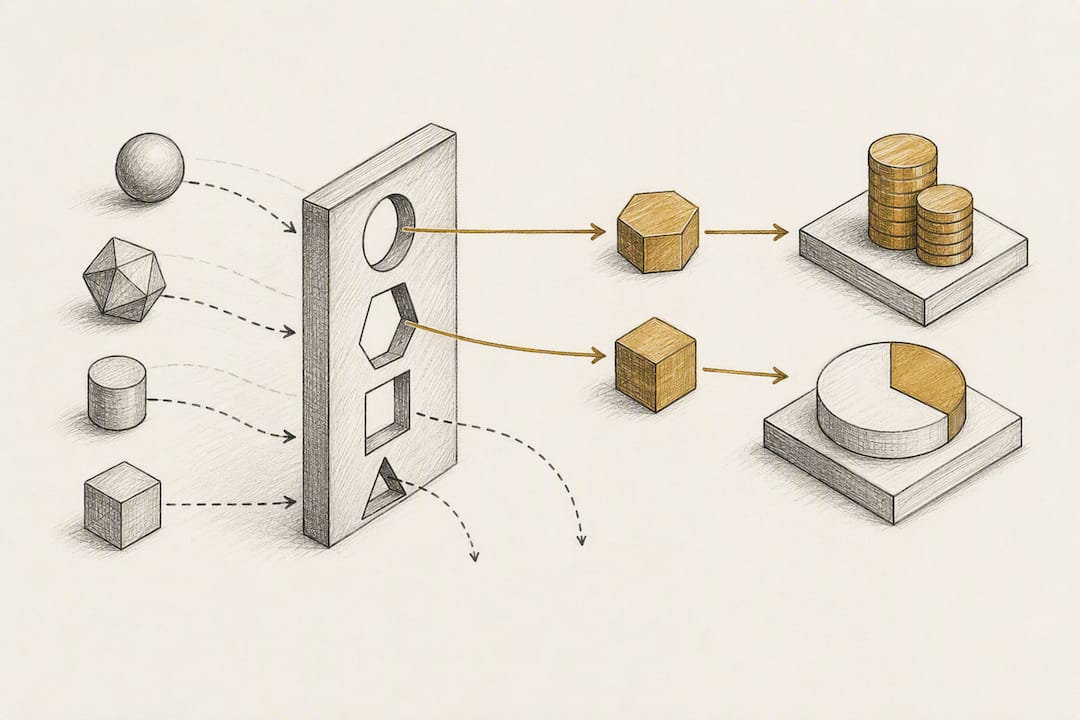
Score each mitigation on two axes: expected cash or margin impact if the risk materializes, and cost to implement the fix. A risk with high financial exposure and a cheap fix gets funded immediately. A risk with low exposure and an expensive fix gets monitored, not funded.
Apply a simple decision rule to every top-voted risk:
- Fund it if the mitigation is cheap relative to the downside.
- Delay it if the risk window is still months away.
- Monitor it if the probability is currently low but could shift.
- Escalate it if the fix requires budget or authority beyond the room.
Pro Tip: Route every “escalate” item to whoever owns the budget within 48 hours of the session. Premortem output that sits in a shared doc for two weeks loses the urgency that made the exercise worth running. Understanding common financial reporting mistakes founders make helps make sure the mitigation’s projected impact is measured the same way your actual budget reports measure it.
When Is a Pre-Mortem Worth the Time, and When Is It Not?
A premortem is worth an hour on any project with real budget exposure or a hard launch date. It’s a poor fit for teams with weak follow-through: an hour of honest brainstorming with no owners assigned afterward is worse than no session at all, because it manufactures a false sense that risk was handled.
For complex technical systems, pair it with structured methods like Anticipatory Failure Determination, which forces a deeper functional analysis than a one-hour workshop allows. Run a premortem before every major milestone, not just once at project kickoff. Plans shift, and so do their failure points. The exercise is only as good as the culture willing to say the uncomfortable thing out loud, a limitation no template fixes.
Turn Your Risk Register Into a Funded Action Plan
A premortem tells you what could sink the project. It doesn’t tell you which fix is worth the cash, and that’s where most teams get stuck holding a risk register nobody acts on. Commerce Catalyst built the DTC Financial Health Assessment specifically for that gap: it takes the risks your team already named and scores them against real cash flow and margin data, so you know which mitigation earns its budget line and which one can wait.
For teams that need someone accountable for actually implementing the mitigations after the workshop ends, not just prioritizing them, the Fractional COO engagement puts an operator inside your existing team to run point on execution. If you’re not sure your premortem output justifies a full engagement yet, start by running your numbers through the DTC Unit Economics Calculator to see where cash and margin exposure actually sit before you fund anything.
Sources
- PRE-MORTEM METHOD OF RISK ASSESSMENT: Gary Klein
- Performing a Project Premortem: Harvard Business Review (2007)
- The art and science of pre-mortems: Brookings Institution (2025)
- Risk assessments: developing the right assessment: PMI
FAQ
What does “pre-mortem” mean?
A pre-mortem is a planning exercise where a team imagines a project has already failed and works backward to identify the causes, so they can address those risks before execution begins.
What is the difference between a premortem and a postmortem?
A postmortem analyzes a failure that already happened, after the damage is done, while a premortem imagines that failure in advance so the team can still prevent it.
How do you perform a premortem?
Gather 3 to 11 cross-functional participants, assign a facilitator and scribe, have everyone silently write failure causes, share them round-robin, cluster and vote on the top risks, then assign an owner and next step to each one.
Who should facilitate a pre-mortem session?
A neutral facilitator who has no stake in the plan’s success works best, since they can enforce ground rules and timeboxes without steering the group toward a predetermined answer.
How often should a project team run a premortem?
Run one during initial planning and again before every major milestone or launch, since new risks emerge as a plan evolves and a single early session won’t catch them all.